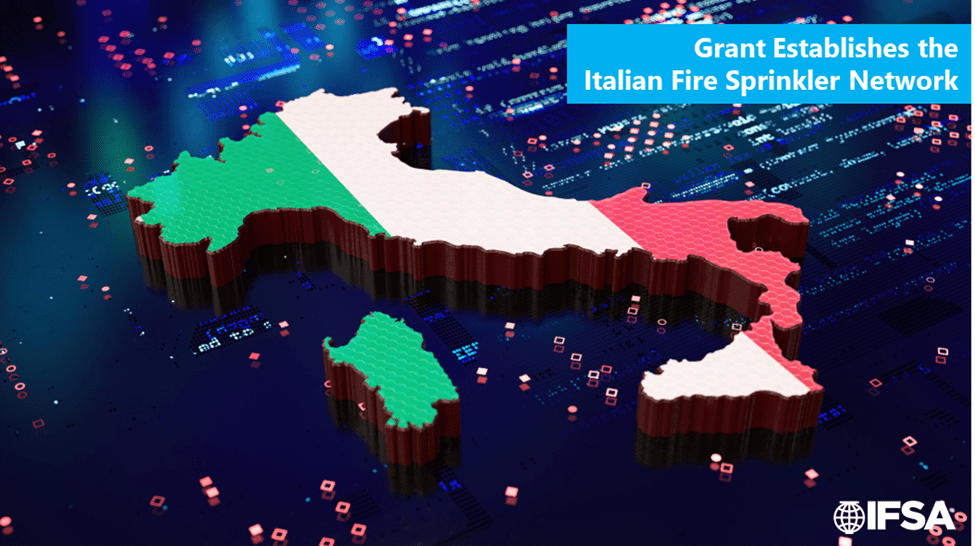
 In 2023, the International Fire Suppression Alliance committed a three-year, $96,000 grant, distributed at $32,000 annually, to support the formation and development of the Italian Fire Sprinkler Network. Working closely with the European Fire Sprinkler Network, the objective was clear: build a sustainable national organization dedicated to advancing the widespread use of properly designed, installed, and maintained automatic water-based fire protection systems in Italy.
Italy is one of Europe’s largest economies, with a population of approximately 60 million and a GDP of approximately $2 trillion. Yet despite its size and infrastructure density, the sprinkler market remains underdeveloped. Many building occupancies lack meaningful sprinkler thresholds, enforcement levels vary, and market supervision has historically been limited. Without coordinated advocacy and industry alignment, regulatory progress was unlikely.
The IFSA grant provided the structure, leadership, and continuity necessary to change that trajectory.
Building a National Platform
The first priority of the grant was to recruit and support a dedicated Italian sprinkler manager to coordinate stakeholders, engage regulators, and lead advocacy efforts. Rather than approaching reform sporadically, the strategy focused on creating a permanent national platform capable of sustaining influence.
The initiative brought together installers, manufacturers, engineers, insurers, and fire officials to align around shared priorities. A dedicated Italian-language website was launched to centralize dependable information on sprinkler performance, standards, and regulatory opportunities. Prior to the network’s formation, public information about sprinkler systems in Italy was limited and fragmented. The grant helped establish a credible, professional voice for water-based fire protection in Italy.
Targeting Regulatory Gaps
Italy’s regulatory framework presents several notable outliers compared to other European countries. There are currently no meaningful sprinkler thresholds for many high-rise residential buildings, care homes, hotels, offices, or shopping centers. In shopping centers, thresholds such as 16,000 square meters are significantly higher than those commonly seen elsewhere in Europe.
The Italian Fire Sprinkler Network focused on:
- Advocating for lower sprinkler thresholds in high-risk occupancies
- Promoting sprinkler protection in high-rise residential buildings
- Highlighting risks in care homes amid an aging population
- Encouraging incentives within Italy’s fire prevention code to favor sprinklers
- Supporting stronger market supervision and competency requirements
The strategy combined research, comparative international analysis, and economic cost-benefit data to build persuasive cases for reform. Rather than relying on isolated incidents, the network positioned sprinklers as a dependable, performance-based solution aligned with European best practices.
Improving Market Integrity
A parallel focus of the grant was strengthening industry competence and market supervision. Italy has historically had a low bar for market entry, with limited controls on design and installation competency. This environment can lead to inconsistent system performance and undermine confidence in sprinkler performance.
The Italian Fire Sprinkler Network worked to promote:
- Third-party accreditation of designers and installers
- Independent inspection of installed systems
- Greater alignment with internationally recognized installation standards
- Training for professionals involved in building approval and enforcement
By addressing both regulatory thresholds and industry performance, the initiative strengthened the long-term credibility of the sprinkler market.
Engagement Through Education and Events
The grant supported conferences, seminars, trade publications, and meetings with regulators and influential stakeholders. These engagements elevated the visibility of sprinklers within Italy’s fire safety dialogue and helped build a coalition of supporters who would ultimately sustain the initiative financially.
A key milestone of the program was securing Italian stakeholders who would contribute funding and ensure that the network became self-sustaining within three years. This approach aligned directly with IFSA’s mission to develop national organizations with similar objectives and long-term viability.
A Strategic, Multi-Year Investment
The total project budget was $150,000, with IFSA providing $96,000 over three years and additional funding expected from Italian stakeholders. This multi-year structure recognized an important reality: regulatory change takes time. Unlike short-term advocacy campaigns, building a national organization and influencing fire codes requires continuity.
The measurable objectives included:
- Recruitment of a national coordinator
- Launch of a dedicated Italian sprinkler website
- Hosting conferences and seminars
- Publishing trade articles and reports
- Gaining financial support from Italian industry stakeholders
- Opening discussions for regulatory amendments
While code reform can take years, establishing a structured, credible national voice was a foundational step toward sustained change.
A Model for National Development
This case demonstrates the strength of IFSA’s Global Partnerships strategy. Rather than funding isolated events, IFSA invested in institutional development. The Italian Fire Sprinkler Network now serves as a coordinated platform for advancing sprinkler advocacy, improving market supervision, and aligning Italy more closely with international best practices. Sometimes, the most consequential progress is not immediate regulatory change. It is the creation of infrastructure, leadership, and industry alignment that enables future change. Through a three-year, $96,000 investment, IFSA helped establish a durable national organization dedicated to promoting effective water-based fire protection systems in one of Europe’s largest economies.