
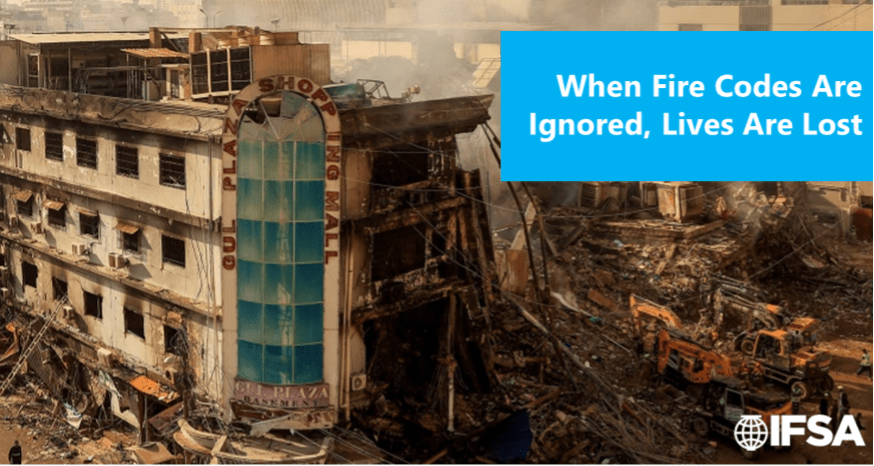
When Fire Codes Are Ignored, Lives Are Lost: Lessons From Pakistan’s Deadly Mall Fire
The recent shopping mall fire in Karachi, Pakistan, which has claimed at least 67 lives, is a tragic reminder of what happens when fire safety requirements exist on paper but not in practice. The multi-story mercantile occupancy lacked critical fire protection measures, including automatic sprinkler systems—despite being legally required to have them.
Pakistan’s Building Code of Pakistan – Fire Safety Provisions mandates active fire protection systems such as sprinklers, fire alarms, and protected means of egress in new and existing mercantile occupancies. These requirements align closely with internationally recognized fire codes and exist for one reason: to control fire growth early, protect escape routes, and give occupants time to evacuate safely. In this case, those safeguards were absent. Reports indicate locked exits, no sprinkler protection, and limited detection—conditions that allowed a manageable fire to escalate into a fatal disaster.
Automatic fire sprinkler systems are among the most cost-effective and reliable life-safety tools available. When properly installed and maintained, sprinklers activate early, suppress fire growth, reduce heat and smoke, and dramatically improve survivability. Decades of global data show that buildings protected by sprinklers experience far fewer fatalities than those without. The tragedy in Karachi underscores a painful truth: when required fire protection systems are ignored or omitted, the consequences are measured in lives lost—not compliance gaps.
This incident is not just a local failure; it is a global warning. Fire safety codes are only effective when they are enforced, respected, and implemented. Building owners, regulators, and authorities must treat sprinkler requirements and other active fire protection systems not as optional costs, but as essential infrastructure. The lives lost in this fire should serve as a call to action—to close the gap between regulation and reality, and to ensure that fire safety systems required by code are actually present when they are needed most.